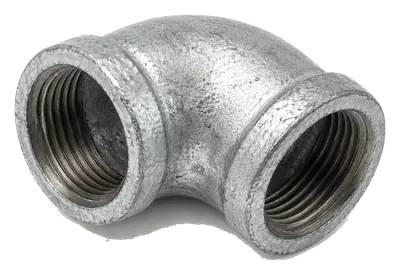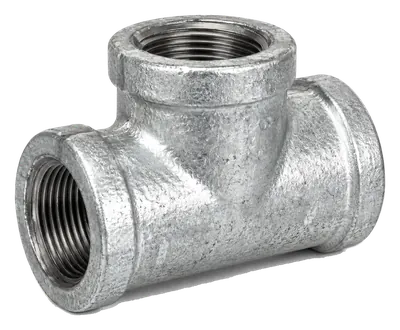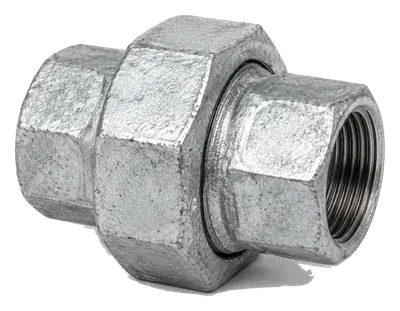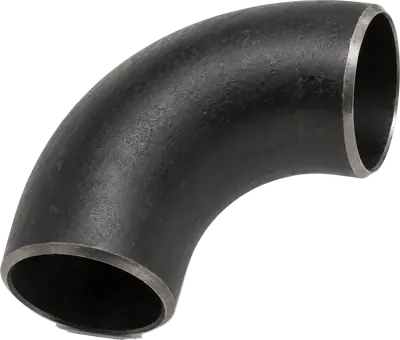
Short answer. Fittings change a pipe line's direction (elbows), split it (tees and crosses), change its size (reducers and bushings), join lengths (couplings, unions, nipples), close it (caps and plugs) or connect it to valves and equipment (flanges). They join to the pipe in one of three ways: threaded (small GI and BI lines), butt-weld (larger and high-pressure steel lines) or socket-weld (small high-pressure lines). Match the fitting to the pipe size, the joint type and the pressure class.
The common fittings and what they do
| Fitting | What it does | Good to know |
|---|---|---|
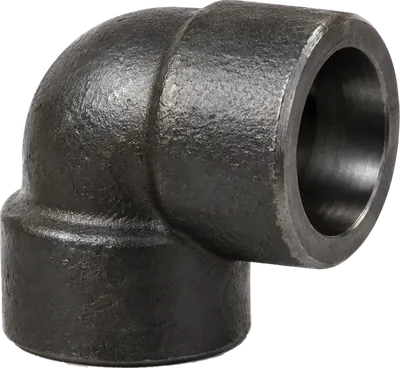
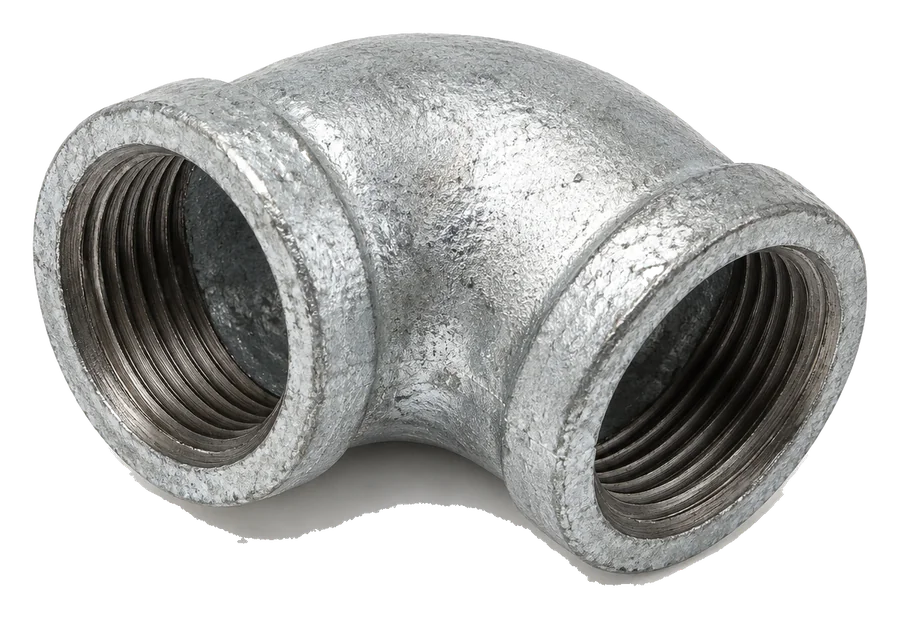
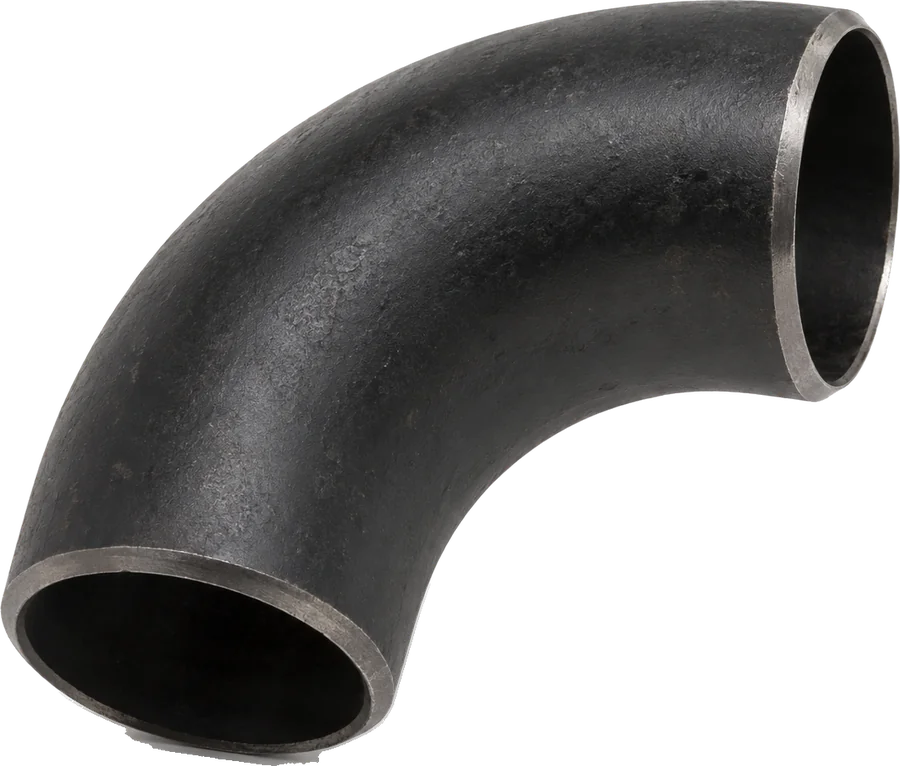
| Elbow (90° and 45°) | Turns the line | A street elbow has one male and one female end, so it fits straight into another fitting. A reducing elbow turns and changes size at once. |
| Tee | Splits or joins a line at 90° | An equal tee has three ends the same size; a reducing tee has a smaller branch. |
| Cross | Four-way split | Less common; used in sprinkler and some water lines. |
| Coupling | Joins two pipes in a straight line | A reducing coupling joins two sizes. |
| Union | Joins two pipes so they can be taken apart again | Put one next to valves, pumps and meters so they can be removed without cutting pipe. |
| Nipple | A short pipe threaded at both ends | Joins two female fittings; "close" nipples are threaded almost end to end. |
| Bushing | Reduces a female opening to a smaller size | Male outside, female inside; fits inside another fitting. |
| Reducer (concentric or eccentric) | Changes pipe size in a weld line | Concentric keeps the centreline; eccentric keeps one side flat, used on pump suction lines to avoid trapped air. |
| Cap and plug | Close the end of a line | A cap goes over a male thread or pipe end; a plug screws into a female opening. |
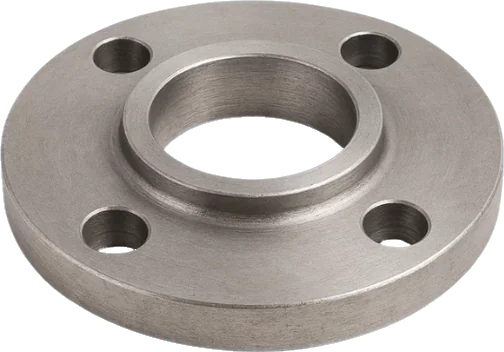
| Flange | Bolted joint to valves, pumps, equipment or another flange | Slip-on, weld-neck, threaded and blind (closes the end) are the common types. |
Threaded, butt-weld or socket-weld
The same fitting shape comes in three joint types. They are not interchangeable, so the joint is the first thing to decide.
| Threaded | Butt-weld | Socket-weld | |
|---|---|---|---|
| How it joins | Screwed onto threaded pipe, joint sealed with tape or compound | Pipe and fitting ends bevelled and welded end to end | Pipe slid into a socket and fillet-welded around the outside |
| Usual sizes | Small lines, mostly up to 4 in | Any size, mostly 2 in and up | Small lines, mostly up to 2 in |
| Usual material | Malleable iron, galvanized (GI) or black (BI) | Carbon steel (ASTM A234 WPB) or stainless | Forged carbon steel (ASTM A105) or stainless |
| Standard | ASME B16.3 (malleable, Class 150 and 300) or EN 10242 | ASME B16.9 | ASME B16.11 (Class 3000, 6000, 9000) |
| Typical lines | Water, gas, fire sprinkler branches, compressed air | Process, steam, fire mains, oil and high-pressure lines | Small high-pressure process, steam and hydraulic lines |
| Pros | No welding; quick to install and change | Strongest, smooth bore, best for high pressure | Easy to line up; strong for small bores |
Butt-weld elbows come in long radius (bend radius 1.5 × the nominal size) and short radius (1.0 ×) under ASME B16.9. Long radius is the default; short radius is for tight spaces. When fitting a socket-weld joint, the pipe is backed off about 1.5 mm (1/16 in) from the bottom of the socket before welding so the weld does not crack as it cools.
Malleable iron vs forged vs weld fittings
- Malleable iron (ASTM A197 for ASME B16.3 fittings) is cast and heat treated, so it bends a little before it breaks. It is the usual material for threaded GI and BI fittings. Galvanized fittings go on GI pipe, black on BI.
- Forged steel (ASTM A105) is stronger and used for socket-weld and high-pressure threaded fittings.
- Wrought steel butt-weld fittings (ASTM A234 WPB) match the pipe wall: order them in the same schedule as the pipe.
NPT or BSPT threads
Threaded fittings come in two thread systems that look alike: NPT (American, ASME B1.20.1, 60° thread angle) and BSPT (British, ISO 7-1, 55° thread angle). They do not seal together in most sizes. Use one system for the whole line, and when adding to an old line, send a photo of an existing fitting or the pipe end.
Flanges in brief
Flanges are rated by pressure class (for example Class 150 or 300 under ASME B16.5) or by PN rating in metric systems such as PN10 and PN16. Bolt holes, bolt circles and thicknesses differ between systems, so a Class 150 flange will not always bolt to a PN16 flange. When you order, give the size, the standard and class, the face (raised face or flat face) and the type (slip-on, weld-neck, threaded or blind).
What to put in your RFQ
- Fitting type: elbow 90°, tee, reducer and so on.
- Size, and for reducing fittings both sizes (for example 2 in × 1 in tee).
- Joint: threaded (NPT or BSPT), butt-weld (with the schedule) or socket-weld (with the class).
- Material and finish: GI or BI malleable, forged steel, carbon steel or stainless.
- Standard or class, if the plans name one.
- Quantity, plus the pipe for the same run, delivery city and target date.
For pipe sizes and schedules see GI pipe sizes and schedules; for picking the finish see GI pipe vs BI pipe. Add fittings to your RFQ from the catalog, or send your list and we price it together.