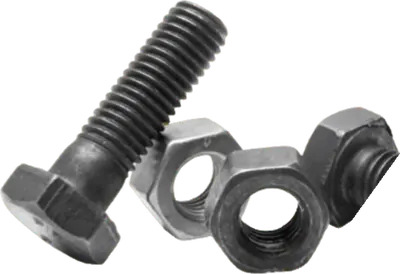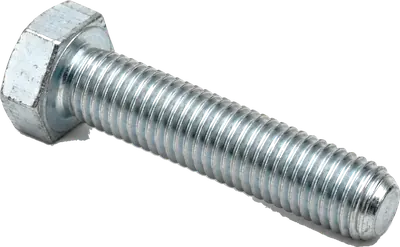
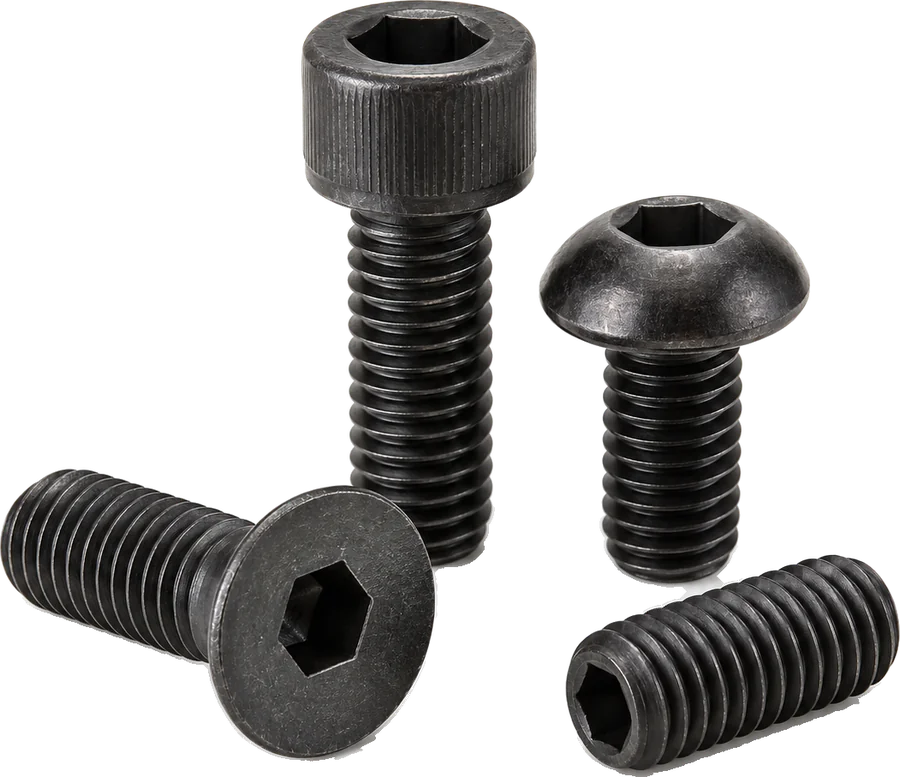
Short answer. "High tensile" means a heat-treated bolt, usually metric property class 8.8, 10.9 or 12.9, SAE Grade 5 or 8, or ASTM A325 or A490 for steel structures. Ordinary bolts (class 4.6, SAE Grade 2, ASTM A307) are not heat treated. Read the grade off the drawing, match the nut to the bolt, and do not hot-dip galvanize the hardest grades (10.9, 12.9 and A490).
How to read a metric bolt grade
Metric bolts carry a property class stamped on the head, set by ISO 898-1. The two numbers tell you the strength:
- The first number × 100 is the nominal tensile strength in MPa. Class 8.8 is about 800 MPa.
- The second number × 10 is the yield point as a percentage of tensile. In class 8.8 the bolt starts to stretch permanently at about 80% of 800, or 640 MPa.
| Property class | Min. tensile (MPa) | Min. yield (MPa) | Heat treated? | Typical use |
|---|---|---|---|---|
| 4.6 | 400 | 240 | No | Light, non-critical fixings |
| 8.8 (up to M16) | 800 | 640 | Yes | The general high tensile bolt: machinery, structures, flanges |
| 8.8 (above M16) | 830 | 660 | Yes | As above, larger sizes |
| 10.9 | 1,040 | 940 | Yes | Heavy machinery, high-load joints |
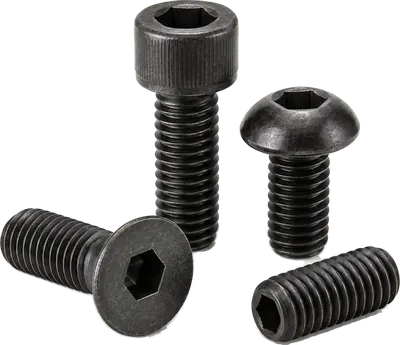
| 12.9 | 1,220 | 1,100 | Yes | Socket head cap screws, tooling, the highest loads |
Minimum values from ISO 898-1 for bolts, screws and studs. The yield figure for heat-treated classes is the 0.2% proof strength.
Inch grades: SAE and ASTM
Inch bolts use two families. SAE J429 grades are marked with radial lines on the head; ASTM grades are stamped with the grade name.
| Grade | Head marking | Min. tensile | Where it is used |
|---|---|---|---|
| ASTM A307 Grade A | "307A" and maker's mark | 60 ksi (414 MPa) | General purpose, light structural and anchor work |
| SAE Grade 2 | No marks | 74 ksi up to 3/4 in; 60 ksi above | Ordinary low-carbon bolts |
| SAE Grade 5 | 3 radial lines | 120 ksi up to 1 in; 105 ksi above | Machinery and vehicles; roughly comparable to class 8.8 |
| SAE Grade 8 | 6 radial lines | 150 ksi | High-load machinery; roughly comparable to class 10.9 |
| ASTM F3125 Grade A325 | "A325" and maker's mark | 120 ksi | Structural steel connections: beams, columns, bracing |
| ASTM F3125 Grade A490 | "A490" and maker's mark | 150 ksi (to 173 ksi max.) | Heavier structural connections |
1 ksi is about 6.9 MPa. "Roughly comparable" means similar strength, not the same standard: never swap a structural A325 or A490 bolt for an SAE or metric bolt without the engineer's written approval.
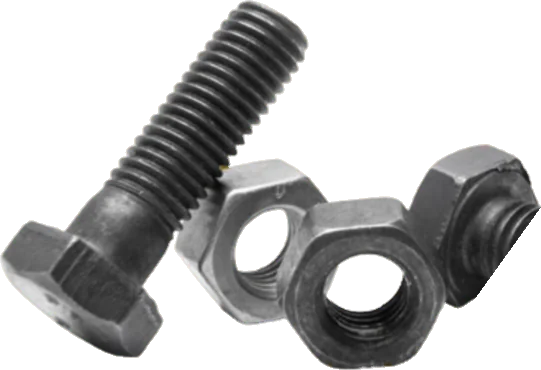
A325 and A490 are structural bolts. They have a heavy hex head, a short thread and they are made to clamp steel plates together in a bolted connection. Since 2015 they sit inside ASTM F3125, but drawings still just say A325 or A490.
Matching nuts and washers
A high tensile bolt is only as strong as its nut. Use a nut grade that matches or beats the bolt:
- Metric: class 8 nuts with 8.8 bolts, class 10 with 10.9, class 12 with 12.9 (ISO 898-2). The class is stamped on the nut face or flat.
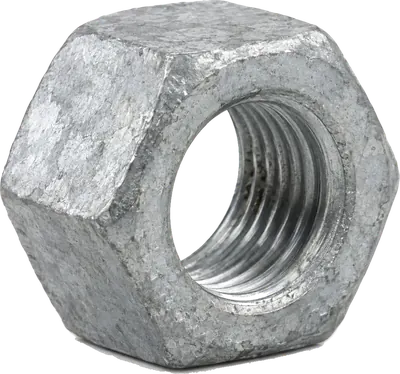
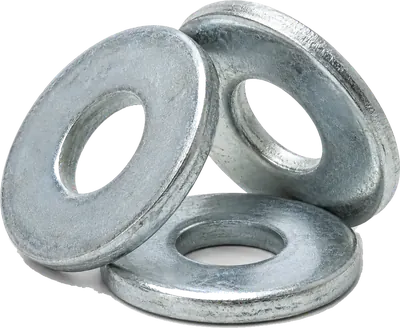
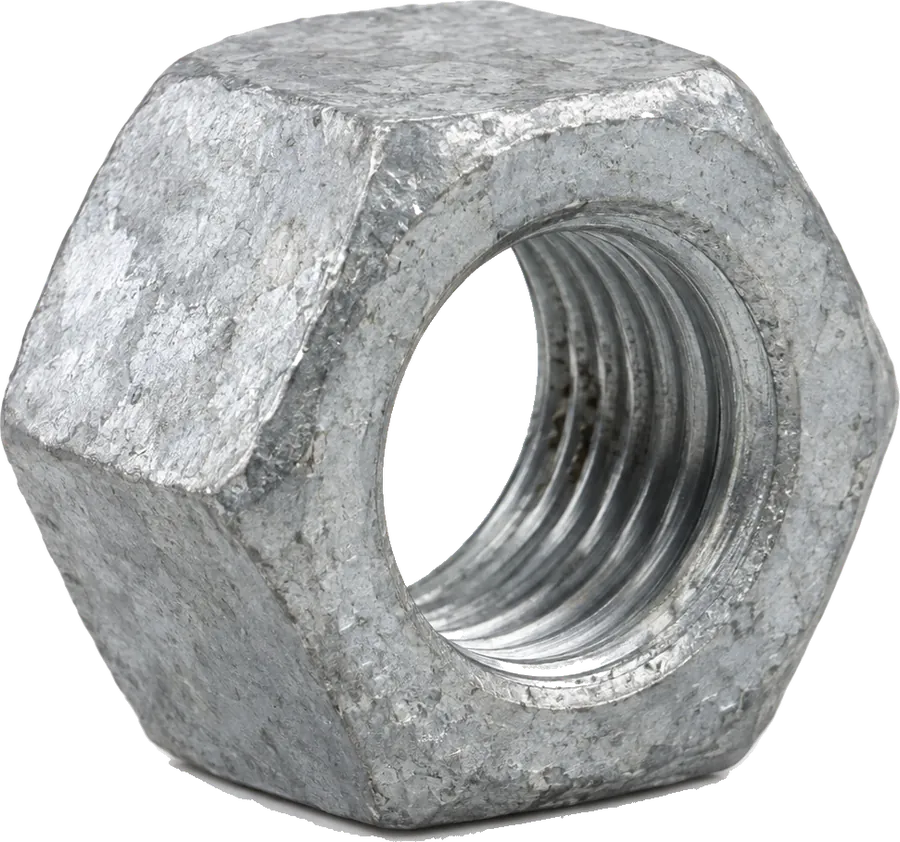
- A325: heavy hex nuts to ASTM A563 (grade DH for galvanized bolts) or A194 2H, with hardened washers to ASTM F436.
- A490: heavy hex nuts A563 DH or A194 2H, with F436 hardened washers.
- SAE: a Grade 5 nut on a Grade 5 bolt, Grade 8 on Grade 8.
Spring lock washers help on light fixings that vibrate, but they are not used in pretensioned structural joints; flat hardened washers are.
Galvanizing high tensile bolts
Hot-dip galvanizing is common for class 8.8, SAE Grade 5 and A325 bolts used outdoors. The nuts are then tapped oversize to fit over the zinc, so galvanized bolts and nuts must be bought together.
The hardest grades are a different story. Class 10.9, 12.9 and A490 bolts are at risk of hydrogen embrittlement: they can crack without warning after the acid cleaning and plating steps. ASTM F3125 does not allow A490 to be hot-dip galvanized. For 10.9 and 12.9, use the coating the designer names (often a non-electrolytic zinc flake coating) and never electroplate them without proper baking. More in our galvanizing guide.
Which grade should I buy?
- Steel building connection? Use the structural grade on the drawing: usually A325 or class 8.8, sometimes A490 or 10.9.
- Machinery, equipment, flanges? Class 8.8 or SAE Grade 5 is the everyday high tensile choice; step up to 10.9 or Grade 8 only when the maker's manual says so.
- Anchoring to concrete? That is an anchor rod job: see anchor bolt grades (F1554 and A307).
- Outdoors or near the sea? Hot-dip galvanized 8.8 or A325, or stainless steel where the design calls for it.
- Light fixing with no load data? Class 4.6 or A307 is enough, and cheaper.
Common sizes buyers ask us for
A few lines that come up often on buyers' lists, written the way they are usually ordered. They are examples of what is usual, not a full list: send your size.
- A325 hex bolt 12 × 38 mm with nut and 2 washers; A325 TC (tension control) bolts 12 × 38 mm
- Grade 8.8 hex bolt M16 × 100 mm
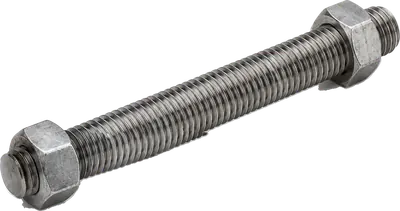
- High tensile stud bolt 5/8 in × 6 in; M20 full-thread rod in 3 m lengths
- Chemical anchor bolts with capsule: 16 × 180, 16 × 190, 20 × 230 and 20 × 260 mm
- Expansion (dyna) bolts: M12 × 100 mm and 16 mm × 4 in
What to put in your RFQ
- Grade or property class, exactly as specified
- Diameter and thread: inch (UNC or UNF) or metric (coarse or fine pitch)
- Length under the head and thread length (full or partial thread)
- Head type: hex, heavy hex, socket head, countersunk
- Nuts and washers per bolt, and their grades
- Finish: plain, hot-dip galvanized, zinc plated or other
- Quantity, delivery city and target date
Add a hex bolt, hex cap screw or socket head screw to your RFQ and type the size and grade. Not on our list? Send your size.