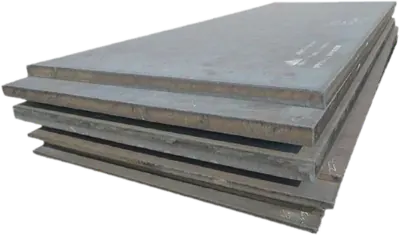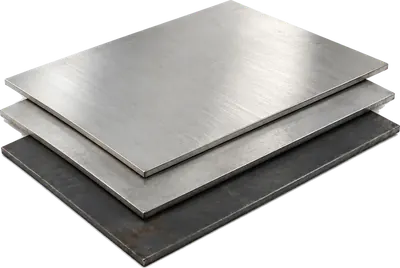
Short answer. Mild steel (MS) plate is sold by thickness in millimetres or inches, usually as 4 × 8 ft sheets (1,219 × 2,438 mm) or cut to size. Steel weighs 7.85 kg per square metre for every millimetre of thickness, so a 4 × 8 ft sheet weighs about 23.3 kg per mm: a 6 mm sheet is about 140 kg and a 10 mm sheet about 233 kg. The usual grades are ASTM A36 and JIS SS400.
Plate thickness chart: inch to mm
Drawings and quotations in the Philippines mix inch and metric thicknesses. One inch is exactly 25.4 mm. The weights below are exact arithmetic for flat steel at 7,850 kg/m³.
| Thickness (in) | Thickness (mm) | Weight per m² (kg) | Weight per 4 × 8 ft sheet (kg) |
|---|---|---|---|
| 1/8 | 3.2 | 24.9 | 74.1 |
| 3/16 | 4.8 | 37.4 | 111.1 |
| 1/4 | 6.4 | 49.8 | 148.2 |
| 5/16 | 7.9 | 62.3 | 185.2 |
| 3/8 | 9.5 | 74.8 | 222.3 |
| 1/2 | 12.7 | 99.7 | 296.4 |
| 5/8 | 15.9 | 124.6 | 370.5 |
| 3/4 | 19.1 | 149.5 | 444.6 |
| 1 | 25.4 | 199.4 | 592.8 |
| Thickness (mm) | Weight per m² (kg) | Per 1.2 × 2.4 m sheet (kg) | Per 4 × 8 ft sheet (kg) |
|---|---|---|---|
| 3 | 23.6 | 67.8 | 70.0 |
| 4.5 | 35.3 | 101.7 | 105.0 |
| 5 | 39.3 | 113.0 | 116.7 |
| 6 | 47.1 | 135.6 | 140.0 |
| 8 | 62.8 | 180.9 | 186.7 |
| 10 | 78.5 | 226.1 | 233.4 |
| 12 | 94.2 | 271.3 | 280.0 |
| 16 | 125.6 | 361.7 | 373.4 |
| 20 | 157.0 | 452.2 | 466.7 |
| 25 | 196.3 | 565.2 | 583.4 |
| 32 | 251.2 | 723.5 | 746.8 |
A 4 × 8 ft sheet is 1,219.2 × 2,438.4 mm = 2.973 m²; a 1.2 × 2.4 m sheet is 2.880 m². Weight = area × thickness (mm) × 7.85. Mills roll to a thickness tolerance, so a delivered sheet can weigh a little more or less than the figure here.
The weight formula
Weight (kg) = length (m) × width (m) × thickness (mm) × 7.85
Example: a 10 mm plate cut to 600 × 900 mm weighs 0.6 × 0.9 × 10 × 7.85 = 42.4 kg. Use the same formula for any rectangle; for a circle, use 0.7854 × diameter² in place of length × width.
Sheet gauge to mm
Thin sheet is often ordered by gauge, not by millimetre. For uncoated carbon steel sheet, gauges follow the Manufacturers' Standard Gauge. A higher gauge number is thinner. Galvanized sheet uses a slightly different gauge table, so for GI sheet ask for the thickness in mm.
| Gauge | Inches | mm |
|---|---|---|
| 10 | 0.1345 | 3.42 |
| 12 | 0.1046 | 2.66 |
| 14 | 0.0747 | 1.90 |
| 16 | 0.0598 | 1.52 |
| 18 | 0.0478 | 1.21 |
| 20 | 0.0359 | 0.91 |
| 22 | 0.0299 | 0.76 |
| 24 | 0.0239 | 0.61 |
A36 vs SS400: which grade?
Most "MS plate" sold in the Philippines is one of two everyday structural grades:
- ASTM A36: 250 MPa (36 ksi) minimum yield, 400–550 MPa (58–80 ksi) tensile. The usual grade on American-style drawings.
- JIS G3101 SS400: 400–510 MPa tensile, with a minimum yield of 245 MPa up to 16 mm thick and 235 MPa from 16 to 40 mm. Common on Japanese and Asian mill certificates.
Both cut, drill, bend and weld easily, and they are often accepted for each other in general fabrication. When a drawing names one grade, or asks for a mill certificate, order to the drawing. For higher strength, designs call for grades such as ASTM A572 Grade 50.
Common sizes buyers ask us for
These come up again and again on buyers' lists. They are examples of what is usual, not a limit.
- Full 4 × 8 ft sheets in 3, 5, 6, 10, 12, 16, 20, 25 and 36 mm
- Large 6 × 20 ft plates in 6, 12, 14 and 25 mm
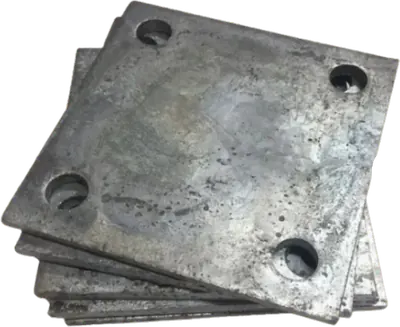
- Cut sizes from 2 to 36 mm thick, most often 6, 10, 20 and 25 mm, in squares and rectangles from 50 to 1,000 mm a side, with or without holes
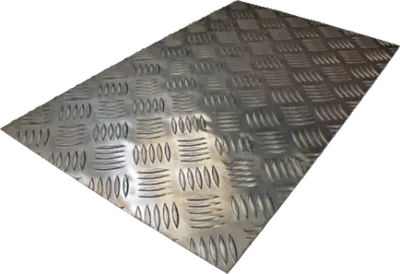
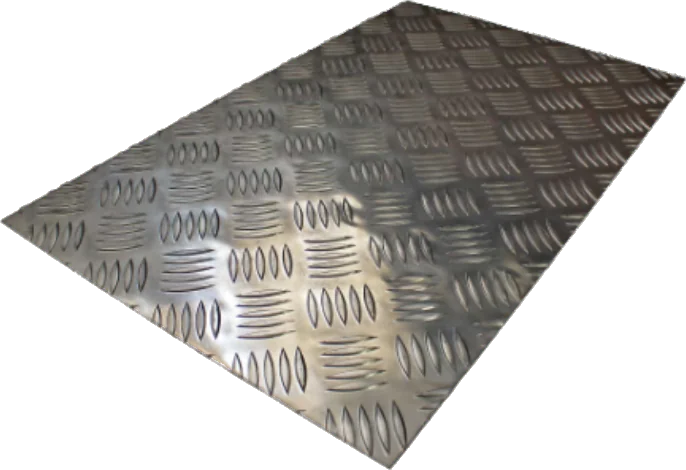
- Checkered plate 4 × 8 ft in 2, 4, 5, 6, 9 and 10 mm
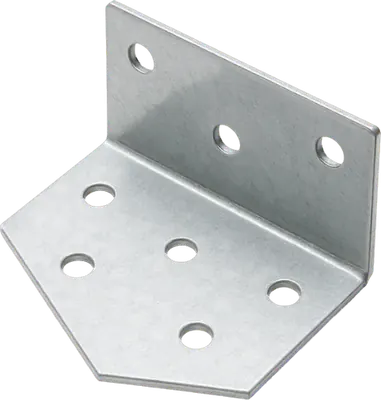
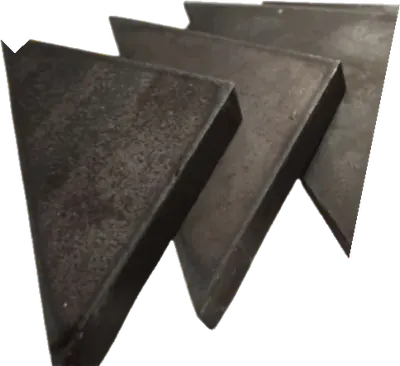
- Stiffener and gusset plates, mostly 6 mm thick, for example 100 × 100, 150 × 200, 200 × 300 and 250 × 300 mm
- Finish: plain, or hot-dip galvanized after cutting
What to put in your RFQ
- Grade: A36, SS400 or the grade on the drawing, and whether you need a mill certificate.
- Thickness, in mm (or inches, but say which).
- Full sheets or cut sizes. For cut pieces, list each size as length × width with its quantity.
- Holes, bends or bevels, if any, with a sketch or drawing.
- Finish: plain, primed or hot-dip galvanized.
- Delivery city and target date.
Add MS plate, checkered plate or steel sheet to your RFQ. For column bases, see base plate sizes.