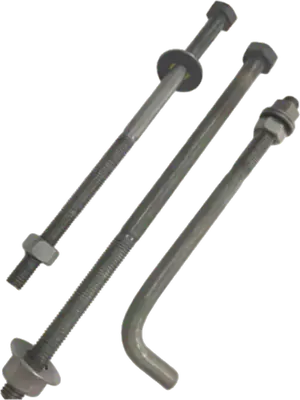
Short answer. An anchor bolt is ordered by diameter × overall length, plus the leg or hook length for L and J types and the thread length at the top. Common inch diameters run from 1/2 in to 2 in (12.7 to 50.8 mm); common metric sizes run from M12 to M36. The structural drawing sets the diameter and embedment; the length follows from the embedment plus everything the bolt has to pass through above the concrete.
Anchor bolt diameter chart
Inch anchor bolts in the Philippines are almost always threaded UNC (Unified coarse, ASME B1.1). Metric bolts use the ISO coarse pitch (ISO 261). The tensile stress area is the effective area of the threaded part; it is the figure engineers use to work out how much load a bolt carries.
| Diameter (in) | Diameter (mm) | Threads per inch (UNC) | Stress area (in²) | Plain rod weight (kg/m) |
|---|---|---|---|---|
| 1/2 | 12.7 | 13 | 0.1419 | 0.99 |
| 5/8 | 15.9 | 11 | 0.226 | 1.55 |
| 3/4 | 19.1 | 10 | 0.334 | 2.24 |
| 7/8 | 22.2 | 9 | 0.462 | 3.05 |
| 1 | 25.4 | 8 | 0.606 | 3.98 |
| 1-1/4 | 31.8 | 7 | 0.969 | 6.22 |
| 1-1/2 | 38.1 | 6 | 1.405 | 8.95 |
| 2 | 50.8 | 4-1/2 | 2.50 | 15.91 |
| Metric size | Coarse pitch (mm) | Stress area (mm²) | Plain rod weight (kg/m) |
|---|---|---|---|
| M12 | 1.75 | 84.3 | 0.89 |
| M16 | 2.0 | 157 | 1.58 |
| M20 | 2.5 | 245 | 2.47 |
| M24 | 3.0 | 353 | 3.55 |
| M30 | 3.5 | 561 | 5.55 |
| M36 | 4.0 | 817 | 7.99 |
Thread data: ASME B1.1 (UNC) and ISO 261 / ISO 898-1 (metric stress areas). Weight is for plain round steel at 7,850 kg/m³ (π × d² ÷ 4 × density), before bending or threading; use it to estimate the weight of a lot, not to invoice it.
Two sizes look alike and cause most mix-ups: 3/4 in (19.05 mm) and M20, and 1 in (25.4 mm) and M24. Their threads do not match, so an inch nut will not run on a metric rod. Always write "in" or "mm" next to the diameter.
Common sizes buyers ask us for
These come up again and again on buyers' lists. They show what is usual, not a limit: send your size if it is not here.
| What | Sizes we regularly supply |
|---|---|
| Diameter | 12, 14, 16, 20 and 25 mm; 5/8 in |
| Overall length | 150 to 900 mm, for example 250, 300, 350, 400, 500, 550, 600 and 650 mm (6 in on short bolts) |
| Bend (L or J leg) | 50 to 150 mm |
| Thread length | 50 to 150 mm (2 in and 4 in are common callouts) |
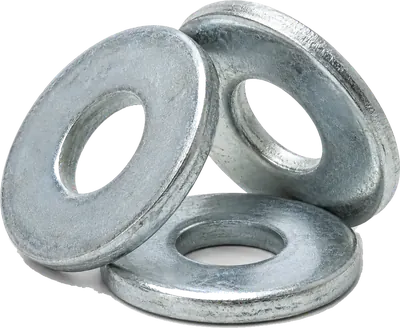
| Nuts and washers | 1 or 2 nuts and 1 or 2 flat washers per bolt |
| Grades named | A307, A325 and 4140 (SCM440-type) alloy steel |
Buyers usually write them like this: 20 mm × 600 mm × 100 mm bend × 100 mm thread, with 2 nuts and 1 washer. That one line has everything needed to price the bolt.
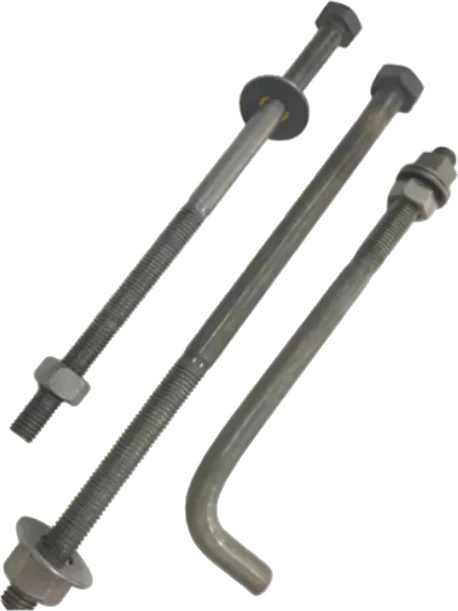
L, J, straight or headed
The bottom end is what keeps the bolt in the concrete. The shape is a separate choice from the grade and the diameter.
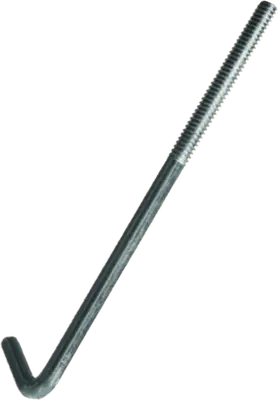
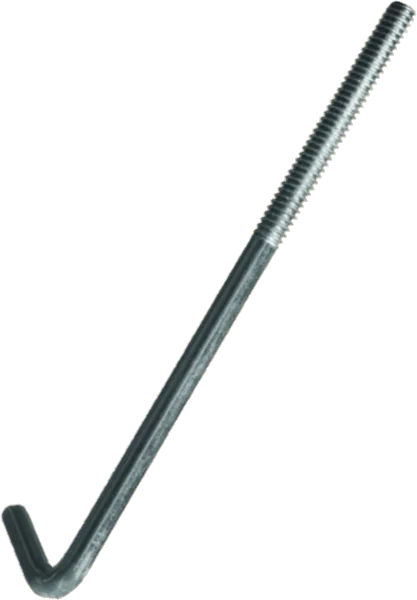
- L-type: a 90° bend with a straight leg. The most common shape for column base plates and footings.
- J-type: a curved hook. Used for lighter anchors such as posts, gates and small equipment.
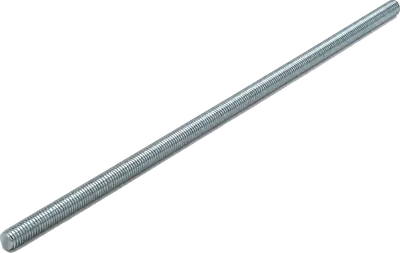
- Straight with nut or plate: threaded at the bottom too, with a heavy nut or a plate washer cast into the concrete. Engineers favour it for higher tension, because a hook can straighten under heavy pull.
- Headed: a forged head at the bottom; it works like a straight rod with a nut.
For the grades that go with these shapes (A307, F1554 Grade 36, 55 and 105), see our guide to anchor bolt grades.
How to work out the length
Overall length is the sum of two parts: what goes into the concrete and what stands above it.
- Embedment. The depth below the concrete surface. It comes from the engineer's design (ACI 318 sets the method); do not shorten it on site.
- Grout. The gap under the base plate, often filled with non-shrink grout after levelling.
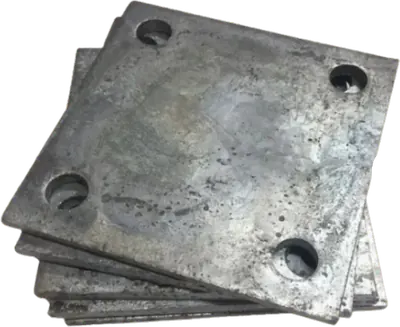
- Base plate thickness, plus any plate washer.
- Nuts and washers. A levelling nut under the plate (if used), a washer and a top nut, often doubled with a jam nut.
- Projection. A few threads should show above the top nut so you can see it is fully engaged.
The thread length at the top has to cover the grout, the plate, the nuts and washers and the projection, with some room for levelling. For L and J types, give the leg or hook length separately; it is measured from the outside of the bend.
Worked example (arithmetic only): 450 mm embedment + 25 mm grout + 20 mm base plate + 10 mm plate washer + 2 nuts at about 20 mm each + 15 mm projection = about 560 mm overall, measured from the outside of the bend. Everything above the concrete adds up to 110 mm, so the thread has to be at least that long, plus room for levelling. Your engineer's drawing overrides any example.
Bolt sets: nuts and washers
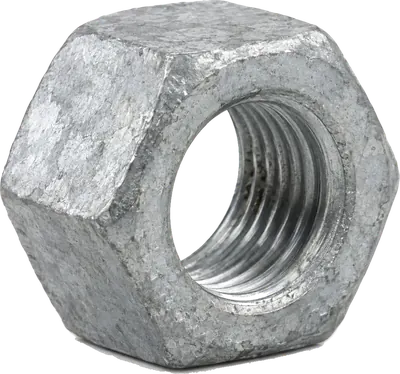
Anchor bolts are usually ordered as sets. A common set per bolt is one levelling nut, one top nut and one washer; some drawings add a jam nut or a plate washer over the base plate hole. Heavy hex nuts to ASTM A563 are the usual match for inch rods; pick the nut grade to suit the rod grade. If the bolts are galvanized, buy the nuts galvanized too: galvanized nuts are tapped oversize to fit over the zinc. Our galvanizing guide explains which coat to choose.
Hole sizes in the base plate
Base plate holes are made much larger than the rod so the bolts can be set with site tolerance; a thick plate washer then covers the hole. The AISC table of recommended hole and washer sizes is in our base plate size guide.
What to write on the order
- Grade, exactly as on the drawing (for example F1554 Gr. 36 or A307)
- Type: L, J, straight or headed
- Diameter × overall length, in inches or mm (say which)
- Leg or hook length (L and J) and thread length
- Nuts and washers per bolt
- Finish: plain, hot-dip galvanized or electro-galvanized
- Quantity in pieces or sets, delivery city and target date
Not on our list? Send your size: add the anchor bolt or J-bolt to your RFQ and type the size in. Our guide on how to send an RFQ has the full checklist.