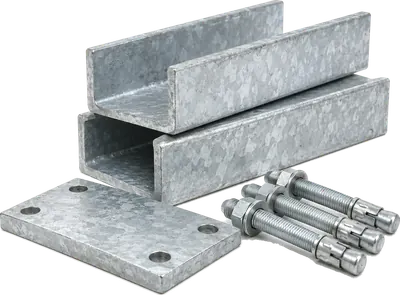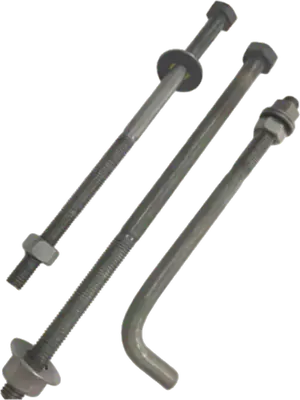
Short answer. Hot-dip galvanizing dips the steel in molten zinc and leaves a thick coat bonded into the surface, typically several times thicker than electroplating. Electro-galvanizing plates a thin, even, bright layer, usually 5 to 25 µm. If the steel lives outdoors, near the sea or in the ground, specify hot-dip. For indoor hardware and small parts that need a neat finish and exact threads, electro-galvanized is enough.
How each process works
Hot-dip galvanizing
The steel is degreased, pickled in acid to remove rust and mill scale, fluxed, then lowered into a bath of molten zinc at about 450 °C. The zinc reacts with the steel and grows a series of zinc-iron alloy layers, topped with a layer of pure zinc. The coat is part of the surface, not a skin on top of it.
Because the part is fully immersed, zinc reaches edges, corners, welds and the inside of hollow sections. Bolts, nuts and small parts are spun in a basket straight out of the bath so excess zinc flies off and the threads stay usable.
Electro-galvanizing
Electro-galvanizing (zinc electroplating) hangs or tumbles clean parts in a zinc salt solution at room temperature and uses electric current to deposit zinc on the surface. The coat is thin, smooth and very even, and it is usually finished with a passivate that gives a clear, blue or yellow tint and some extra protection.
Side by side
| Hot-dip galvanized | Electro-galvanized | |
|---|---|---|
| How | Dipped in molten zinc, about 450 °C | Zinc plated by electric current, room temperature |
| Typical coat | Tens of microns; ISO 1461 asks for an 85 µm mean on steel over 6 mm thick | About 5 to 25 µm (ASTM B633 classes Fe/Zn 5, 8, 12 and 25) |
| Bond | Alloyed into the steel surface | Plated on top of the surface |
| Coverage | Inside and out, edges and welds | Mostly outer surfaces; little reaches inside tubes |
| Look | Matte to bright grey, sometimes spangled or uneven | Smooth and bright, clear, blue or yellow tint |
| Threads | Thicker coat; nuts are tapped oversize | Standard thread fit |
| Part size | Up to the size of the galvanizing bath | Small parts and hardware |
| Common standards | ASTM A123 (fabricated steel), A153 (hardware), ISO 1461 | ASTM B633 |
| Best for | Outdoor, coastal, buried and wet service | Indoor and dry service, appearance parts |
How long does each last?
Zinc protects steel by corroding slowly in its place, and in a given environment it is used up at a fairly steady rate. So coating life is roughly proportional to coating thickness.
ISO 9223 groups sites into corrosivity categories and gives the typical yearly zinc loss for each:
| Category | Typical site | Zinc loss per year |
|---|---|---|
| C2 low | Dry, clean, mostly rural | 0.1–0.7 µm |
| C3 medium | Urban and light industrial, mild coastal | 0.7–2.1 µm |
| C4 high | Industrial, coastal with moderate salt | 2.1–4.2 µm |
| C5 very high | Humid industrial, coastal with high salt | 4.2–8.4 µm |
Rough arithmetic for a C3 site at the top of its range: an 85 µm hot-dip coat holds out for about 40 years, an 8 µm plated coat for about 4. Real life depends on the site, rain, salt spray and how often the steel stays wet, so treat this as a comparison, not a promise. Much of the Philippines is warm, humid and close to the sea, so outdoor steel often sits in C3 to C5.
Bolts, nuts and threads
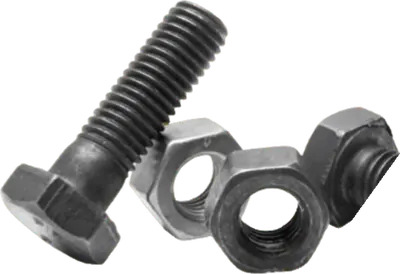
- A hot-dip coat adds metal to the threads, so galvanized nuts are tapped oversize. Order hot-dip bolts and nuts together as matched sets; a plain or plated nut may not run on a hot-dip bolt.
- Do not mix finishes in one joint. A plated nut on a hot-dip bolt corrodes first and leaves the joint unprotected.
- Very high-strength bolts such as A490 must not be hot-dip galvanized, because the process can make hard steel brittle. Follow the bolt standard; plated high-strength parts also need a baking step against the same risk.
- Electro-galvanized hardware suits indoor fixings, machine screws and anything that has to look neat and run on standard threads.
Choosing the bolt grade itself? See anchor bolt grades explained.
Fabricated steel: design it for the bath
Hot-dip galvanizing is done after fabrication, so a few details on the drawing save trouble:
- Vent and drain holes in every hollow section and closed box. Zinc has to flow in and out, and trapped air or moisture can burst a sealed part in a 450 °C bath.
- Clean welds: weld slag and anti-spatter spray do not galvanize. Weld first, galvanize after.
- Thin plate and long, slender parts can distort at bath temperature; ask about size before you fabricate very long pieces.
- Field welds and cuts made after galvanizing are repaired with zinc-rich paint (ASTM A780 covers the repair).
When to pick which
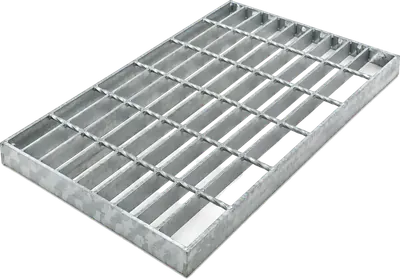
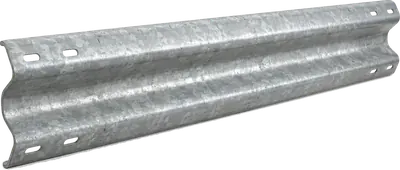
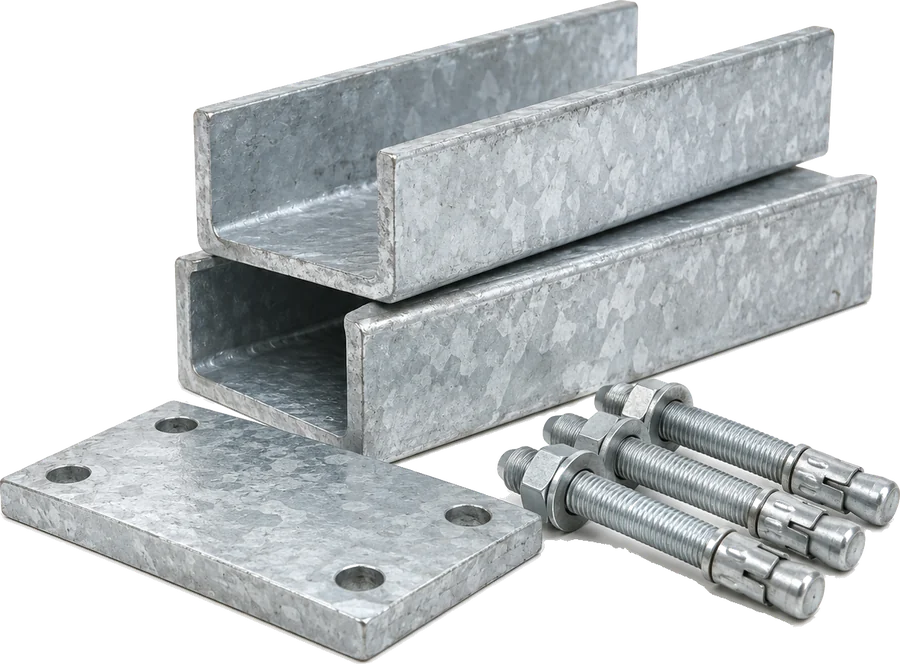
Pick hot-dip for anchor bolts and base plates outdoors, grating, guardrails, posts, towers, structural steel exposed to weather, anything near the sea and anything buried or in wet ground.
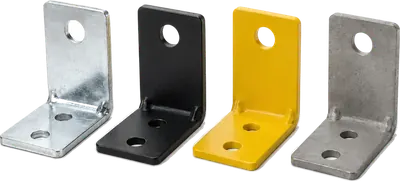
Pick electro-galvanized for indoor brackets, hardware, small fasteners and parts that need a uniform bright look or precise threads.
Want colour as well? Paint over galvanizing (a duplex system) gives colour and a longer life than either coat alone. The zinc needs light sweep blasting or an etch primer first; see coating and finishing.
Ordering a galvanized finish
Write the finish on every line: "hot-dip galvanized" or "electro-galvanized", not just "galvanized". For hot-dip galvanizing of your own fabricated steel, send a list or photos with the size and quantity of each piece. You can also order anchor bolts, hex bolts and plates with the finish already on them.